Autologous Biological
Treatment
Regenerative medicine may be defined as the process of replacing or “regenerating” human cells, tissues or organs to restore or establish normal function. For instance, some Regenerative medicine approaches involve the process of biological tissues from the patient, such as blood or fat.
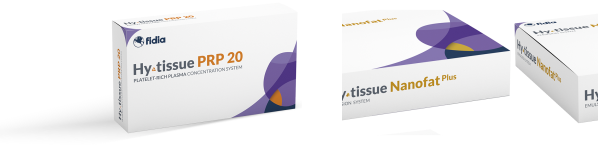
Platelet-Rich Plasma (PRP) is obtained from the patient’s blood and contains a high quantity of platelets compared to the basal value. The platelets, and therefore the PRP, provide a large quantity of growth factors and other bioactive molecules, which accelerate tissue repair and regeneration processes.
The healing and regenerative effects of PRP make it suited for many applications such as skin rejuvenation, scar treatment, hair restoration, etc.1
Through the processing of a small amount of lipoaspirated adipose tissue, it is possible to obtain a microfiltered emulsion called “Nanofat”, which contains different types of cells, including regenerative precursors.
Nanofat grafting can be useful in the treatment of dark circles around the eyes, scar treatments,2 and in rejuvenating treatments for face, décolleté and hands.3